

In 1990, Saddam Hussein invaded Kuwait.
It was a dispute over oil, a misread bluff, a middle finger towards Western powers, a destructive move for Iraq’s economy.
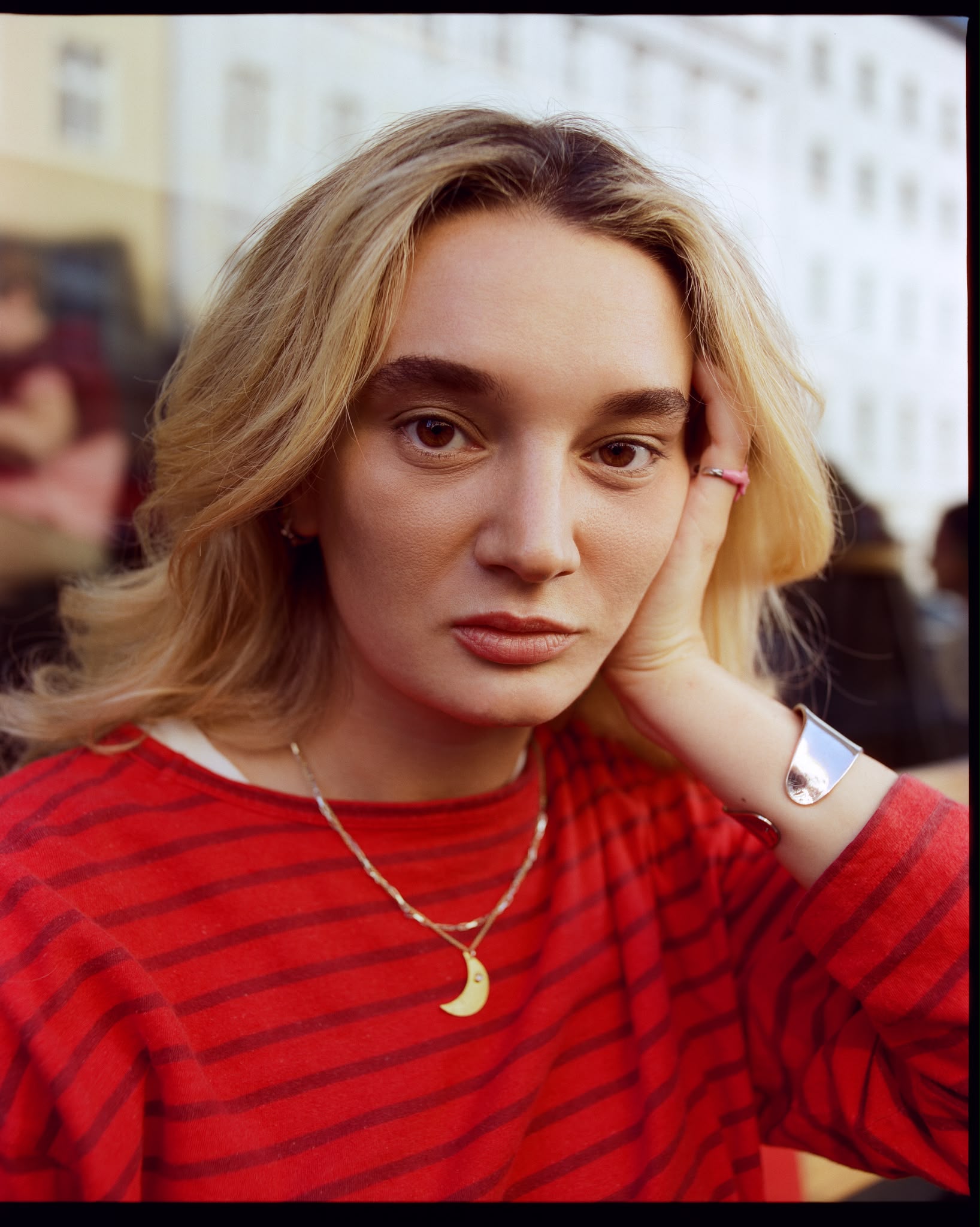
In 2026, Safia Al Bagdadi publishes her 4th novel, the first one under her real name, and tells the story of how her upbringing in Saarbrücken was disrupted by Operation Desert Storm in “Unser Haus mit Rutsche” (eng: our house with a slide).
Oftentimes, politics can seem large and untouchable. In reality, though, politics is everything to the individual. In her novel, Safia Al Bagdadi shows how geopolitics can change a family and can turn origin, religion, and nationality from banal to wildly impactful.
Her story is that of Leila, her “alter ego”. They share a lot of experiences, and she agrees that the protagonist carries many of the traits that “make me what I am”, but Safia Al Bagdadi is decisive in arguing that this is not an autobiography, not a “documentary of a single life”. What's important to her is to shed light on the lives of many, especially immigrant families in Germany. She hopes they can connect to the experiences she writes about.
I, for one, can be a testimony to her success in this endeavor– I relate to the childhood of Leila in many ways. It is not a singular story, but a much-neglected, important narrative within third culture generations.
The novel accompanies Leila, the protagonist, in two parallel timelines: her childhood in Saarbrücken, Germany, and her adulthood in Paris. Whilst her childhood is tinted with dreaminess, full of games and imagination, her adult life is tainted with desperation.
As a child of a French mother and an Iraqi father, Leila experiences a union of two cultures and grows up in a lively, atheist household. She then witnesses how the Gulf War (1990-1991) changed her father, making him a fanatic Muslim and an Iraqi- seemingly more so than before. The story explores how the dynamic of her family was altered when religion and origin suddenly mattered.
I picked up the novel in a night-bookshop in Berlin after my restaurant shift, in search of books that would bring me closer to the complex web of Middle Eastern conflicts and politics. It lay on the first table at the entrance, winking at me.
As is often the case with books, I felt the need to suppress my expectations. Being disappointed by a story is a feeling of complete deflation I don’t wish on anyone. And yet! The novel managed to transform me. It took me on a journey into my own childhood, and, at the same time, taught me things I had sought to know for a long time. The lightness of her writing is what impressed me first. The story, despite being loaded with complex social issues, allows you to view the world through a child’s mind.
Next, it was the honesty, the proximity to real life, as complicated and unapologetic as it may be, that stayed with me. Exploring a family with two parents who weren’t German, it managed to weave in belonging, religion, love, dreams, and destruction on the same set of pages.
Finally, her story became my favorite read of the year as a testimony to political storytelling. It creates understanding by inviting you into a microcosm and handing you the tools to apply and enlarge the perspective onto a grand plane– politics. It encapsulates the essential mission of this magazine, and I am grateful not only to have come across the book, but to have had the honor of interviewing the author herself.
Unfortunately, her novel is not yet available in English. I hope it will be soon, and in the meantime, this article aims to offer an insight into the author’s person and her writing.
The novel thematizes family, religion, geopolitics, and the power of imagination. It does not concentrate on the racism that lies underneath the maternal grandmother’s rejection of the marriage. Whether with the intention of not victimizing herself, or through an earnest lack of impact, Safia Al Bagdadi does not address any racism that might have occurred towards her. However, in the span of the interview, she shares something that speaks to her experience as a French-German-Iraqi female writer. The pseudonym with which she published her first three books was not her choice. Safia Monney sounds less foreign, less ‘Muslim immigrant’. It was a requirement by her former publisher, arising out of the concern that readers would assume her books are about migration and identity crises if she were to keep her name. It would be misleading. Safia Al Bagdadi’s heritage, her father’s homeland and the name he gave her, had become an obstacle, a challenge to her career– one that she had best overcome by shedding it. With “Unser Haus mit Rutsche” she took back her name.
I think it was important for me to take my name back for myself, to feel real again, because I had the feeling that with this pen name — even though it was also my grandmother's maiden name — it just felt superficial, like I was hiding. And I was at a point in my life where I thought, I'm not writing just as a pastime — I want to address things that matter to me, and to do that, I have to be honest. And because I want to be honest, I also want to do that under my real name, without hiding. That's what it was about for me. So it feels really good now, writing under my real name.
Under her real name, and with an honest story, Safia Al Bagdadi invites us to accept ambivalence in a real, subtle, and humorous way.

The family we encounter in “Unser Haus mit Rutsche” is different from “migrant families” that German literature likes to introduce. The parents, in love and dedicated to building their own oasis, commit themselves to an atheist household. Intellectual dinners, international friends, endless ambitions, and eccentric imagination are the pillars of the family of four. There is no “struggle for integration” as German literature often likes to portray it. For the first few years of Leila’s childhood, belonging is family, it seems.
That is a conscious decision of the author, a decision to portray the honest reality of mixed-heritage families: Even this multicultural aspect,[...] that this family is actually completely integrated into the country — into their adopted homeland. And somehow it's not really about being integrated or particularly being German in this case; they just want to do their own thing. It doesn't really matter to them what's going on around them. But then of course there are tensions, because they realize you can't fully break away from where you come from.
Coming from a multicultural background myself, her story uniquely resonated with me. The story conveys the child’s confidence in an identity that transcends nationalities, combined with an adolescent confrontation with heritage and religion.
These tensions that provoke the realization that you cannot “break away from where you come from” arise in the form of the Gulf War. Yet, when I ask Safia whether the break within the family, and between the father and daughter, was avoidable, she shakes her head.
That's a difficult question, because I think it actually couldn't have turned out differently than it did — even in the novel. I think, of course, a big problem, one cause, is the historical event of the Gulf War — that the father falls into depression, it takes away his livelihood, and he then seeks refuge in religion, but in a fanatical and unhealthy way. I'm not sure whether that wouldn't have been avoidable if this historical event hadn't happened. Because it might only have been a trigger and the true cause lies deeper, in the father’s personal and professional failure. I also tell in the novel how people sometimes use big historical events as excuses, to say, "well, it didn't work out because of that war back then," — that people offload things onto these big events that are supposedly beyond their control. I think that's often an excuse to avoid facing one's own guilt. Others like to use that too — the daughter, in this case, uses it to keep seeing her father as a hero; she excuses his behavior by saying he couldn't help it because this war came.
In a way, the Gulf War, far away and yet so close, becomes an inescapable reckoning with heritage.
For the author herself, national identity is split between France and Germany. Does she feel Iraqi to some extent? I ask her. Not so much. Whether that's because of the lack of Iraqi food, language, culture, represented in their childhood home? She seems to wonder out loud. Their German childhood was spent close to the French border, but far away from her father’s home country. Maybe that’s it.
For the novel, she conducted extensive research on the Gulf War and Iraq’s history. In combining today’s retrospective facts with what she remembers her father telling her, she invites the grey zones. Against the backdrop of prominent narratives, sharing the personal perceptions becomes a political act.
I could initially draw on what I experienced myself as a child, but that becomes rather blurry after a while — and also, to base the father figure in the novel on what my own father maybe told us back then about Iraq, I had to research to check what was actually true, or what the situation really was.
Her final portrayal focuses on the father’s viewpoint. A Shia Iraqi, progressive, long gone from his homeland, with aspirations to become a sales merchant connecting Europe to Iraq and the Gulf. She herself has only travelled to Iraq once, in the spring of 1990. The novel shares the experience. She met her father’s family, saw the portraits of Saddam Hussein lining the streets, noticed the significance it held to identify as Shia, the bond it instantly created between her father and a taxi driver. She witnessed the contrast between life on the street and life within the house. Her cousin, going to university, whispering in her ear that she would really rather marry young. The uncles, bringing out the alcohol from its hiding place and listening for the neighbors. She also experienced the bazaars, the mosques, the Wadi al Salam, and the nature. The color of it all.
I wouldn't say I am glorifying Saddam — we all know better; he was a terrible person. I just think there's this — well, what's difficult is that Iraq, before Saddam Hussein invaded Kuwait, was actually a very open, Western-oriented, progressive country, in which women in particular were advanced, encouraged to study and work. And when you look today, after Iraq was supposedly "liberated" in the name of democracy, it's actually turned into the complete opposite — you hardly see any women on the streets anymore and when you see some they’re always veiled, and it's become much more conservative. Also the gap between rich and poor has become huge, the middle class completely vanished. That's a development I don't see as progress.
I also think the US can be criticized for simply interfering in this conflict between Kuwait and Iraq. And it is highly questionable why the US held on to the economic UN-sanctions against Iraq for over a decade after the war. And what I find difficult now is that [...] when you look at the Middle East today, these countries aren't allowed to develop on their own — there's constant interference from outside. And that's been going on since the First World War: when the Ottoman Empire collapsed, Great Britain and France mapped out artificial borders without taking into account the different cultural and ethnical groups living there, creating and controlling countries as Iraq, Palestine and Syria and there's actually never really been a chance for these countries to develop on their own. Countries like Iraq are so young, only 105 years old. Until today, the goal of the interfering parties seems to be keeping the whole region destabilized to access the region’s resources, rather than bringing true democracy.
The wish to pivot from a centralized Western perspective on Middle Eastern conflicts is not written about in the novel. The child’s mind, the relationships between father and daughter, and husband and wife, are at the center. Nevertheless, her personal stories, the memories of what her father thought, the debates they had at the dinner table, and the atmosphere in the country are valuable for a world that is desperately looking for different approaches, and seems robbed of ambiguity.
That was definitely one of my concerns too — to convey this complexity that existed in world politics, and specifically in the situation in Iraq — that there was this ambivalence, that it wasn't so black and white that you could say, "yes, these are the bad guys and the good guys need to take them out," but that behind it there was actually a complex history.
Reading the novel impressed exactly that on me. Through the character of Babe, the father, she showcased the loyalty for a country that can surface from dead waters when the subject of said loyalty is attacked. What does a man (or woman) feel when his country is being ostracized (even if for good reason)? What does he feel when his family is being starved by UN Resolutions? All of a sudden, it matters to identify yourself with your country. His feelings towards Saddam, before and after the invasion, before and after the trade embargo that ended up lasting more than ten years and starving normal people, embody a human reaction.
At the same time, what does his daughter feel when the complex web of reactionary emotions suddenly introduces religion and sin into her home? The loyalty that makes so apparent the father’s heritage and the religion of his upbringing creates a rift between the life he chose for himself and his origins. There is no cure for that, neither in real life nor in the novel. It pushes us to accept the ambivalence.
Right now, in our time, I think it's important to engage with politics, because so much is at stake worldwide. I want to do that on my own level, through storytelling; I wouldn't trust myself to actually go into politics as a politician. But I think everyone can make their own contribution, through art, through activism, by helping people. I think it's important in our time, if we want to avert a big catastrophe.
It's working! I assure her. Telling stories is political. Especially those that are so close to life that they do not have a magical solution, simply a plead to look closer, and to care.
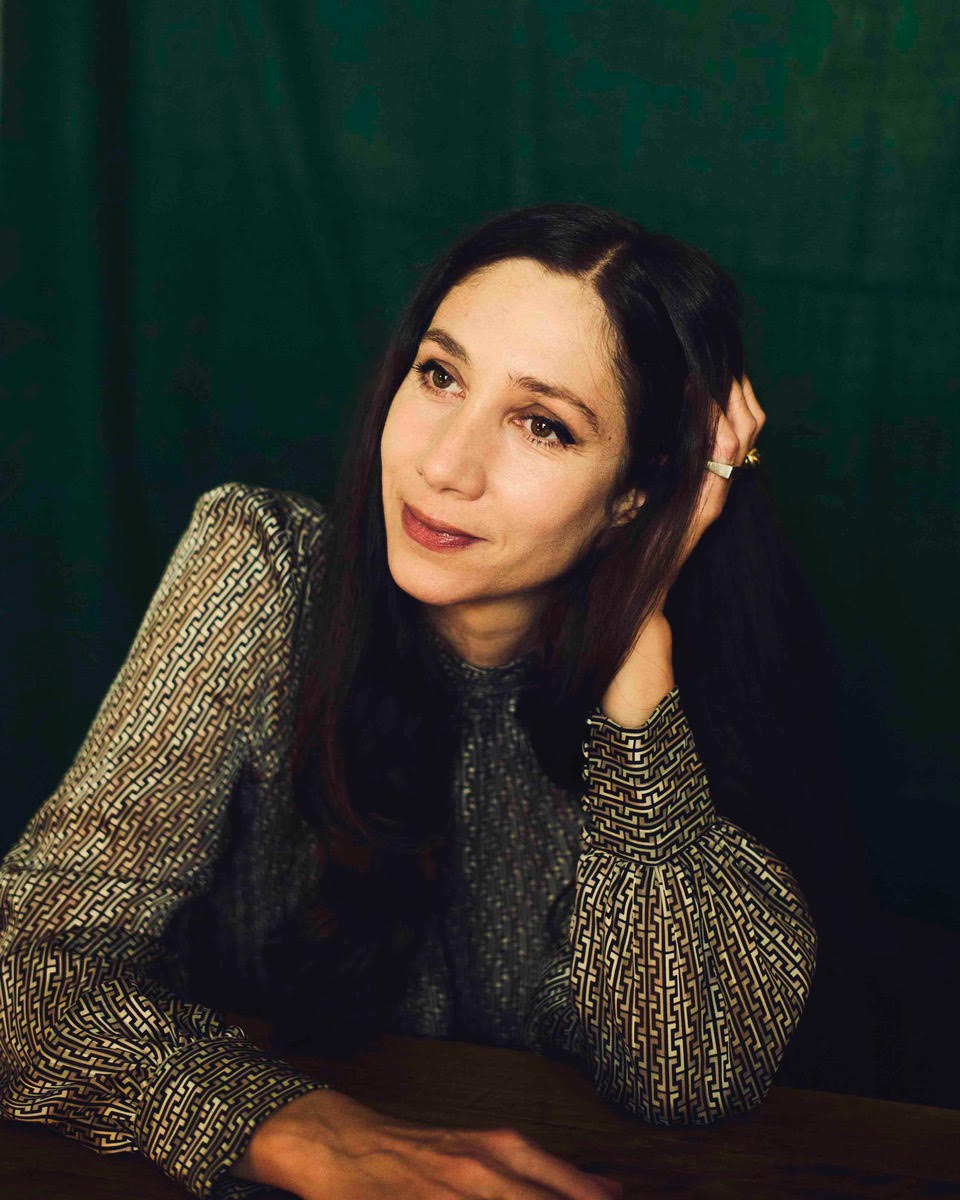
Image Copyright by Cyril Zannettacci.
Religion, the subject of her father’s fanaticism, his escape from a world that burdens him with guilt and helplessness, is still a struggle for Safia Al Bagdadi.
Yes, I'd say it's a conflict [...]. One I haven't resolved internally either, since the tragedy of the novel is that the father is initially completely atheist. He says there's no religion, no God. The mother is the same, even though the mother actually comes from this bourgeois, very Protestant family. But the parents, mother and father, decided that religion shouldn't play a role in their family. Their children were to be unbaptized and raised without religion. And then suddenly there's this shift, where the father turns to religion — and of course to the religion he knew from his childhood: Islam. And that's where the children are left standing. They just don't understand anything anymore, because their father had claimed until recently that there's no God, and suddenly he says that's all that matters in life. And I think understanding that as a child, or as a teenager, is basically impossible. Or difficult. And even later, I still find it difficult to find a solution to this.
Towards the end of the interview, Safia Al Bagdadi asks me: how do I combine my religion with my self-determination? We converse about my own journey, and I tell her that it's not without struggle in any way.
There may not be a clear solution- again. However, it is an invitation to dialogue, to stay curious. By accepting ambiguity, she invites honesty. And she does another powerful thing: Despite not being a ‘magical solution’, the novel does instill warmth. It reminds us of a companion we tend to forget about: our minds!
I think fantasy or at least imagination is vital for survival, and enables hope. I think that in difficult situations, fantasy is what helps you get through, and imagination is of course also progress — without fantasy, without imagination, we surely wouldn't have invented a lot of things in the history of humanity. There's always someone who said, "wouldn't it be cool if we invented some kind of lightbulb or light" — that just takes imagination. Otherwise we'd probably still be living in caves. It also takes away the fear of reality.”
Sharing this fantasy and reminding others of its power is Safia’s politicality. Its impact may be subtle, but it stays with you. The beautiful thing about relearning imagination is that it can take you places –futures, memories, utopias– and give you the courage to continue.
To close off my interview with Safia Al Bagdadi, I asked her: If you could change one thing in the world right now, what would it be?
Her response:
That we all — maybe again, or maybe for the first time — really stick together. I don't know if it's "again" or "finally, for once," stick together. If we want to avert things like climate change and big conflicts, [...] it only works if we stick together and want to do something good together. I have the feeling right now that every country works for itself when it comes to wars, trying to protect itself in its own little corner. But where is the solidarity? We say we want to find a peaceful solution together. That's what I wish for.
Can we stick together once again? Or will it be for the first time? Can we make her dream come true? The basis of collaboration and solidarity is understanding and the ability to accept other perspectives. That is what “Unser Haus mit Rutsche” teaches us. To invite the ambiguity, the other realities. Perhaps at some point, we will understand each other just a tiny bit better, and stick together some more.
Thank you, Safia, for sharing your story, and for having a conversation with me.