

title image: Marius Arnesen, CC BY-SA 2.0 https://creativecommons.org/licenses/by-sa/2.0, via Wikimedia Commons
First published on Sarya's Substack: saryafarah.substack.com
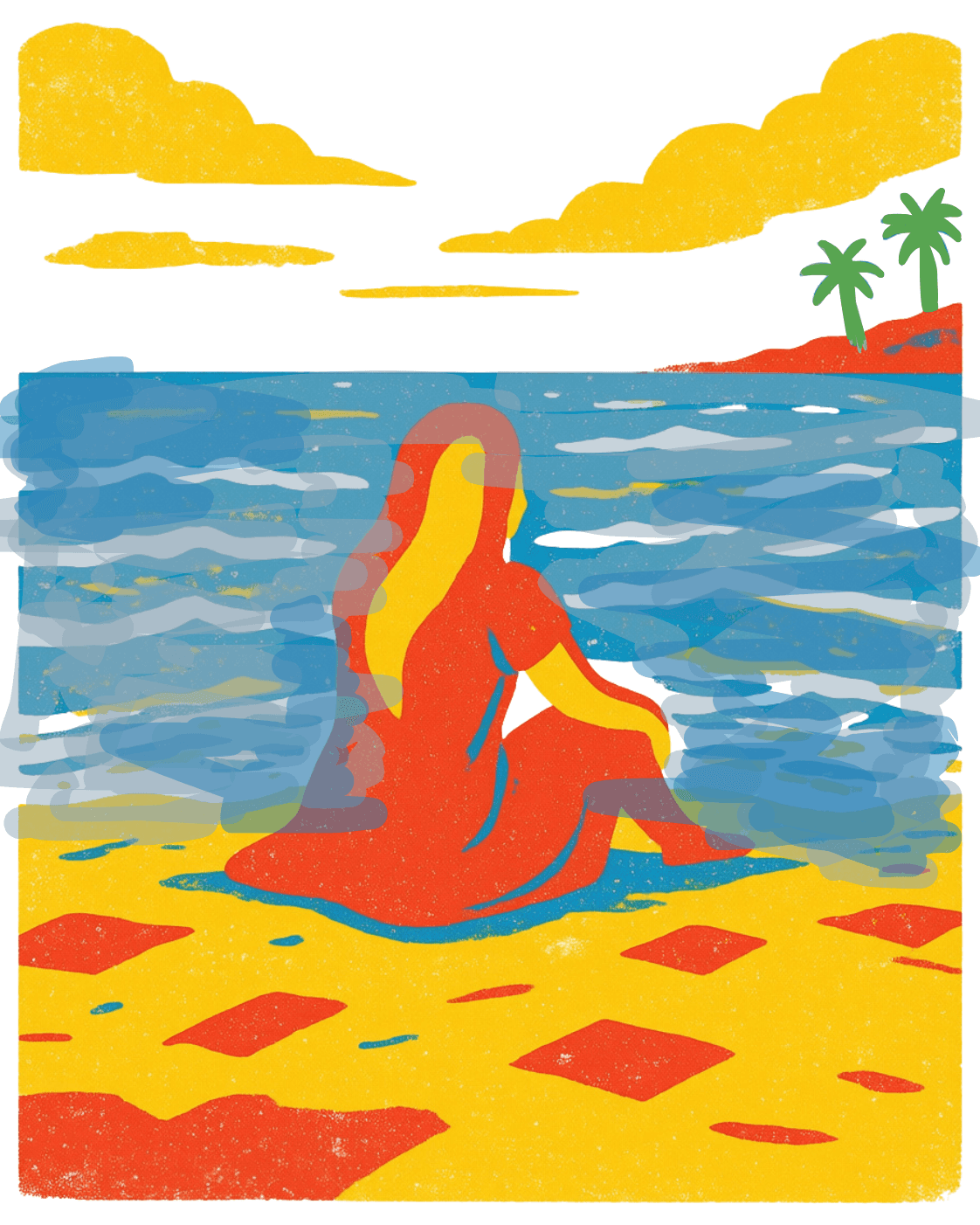
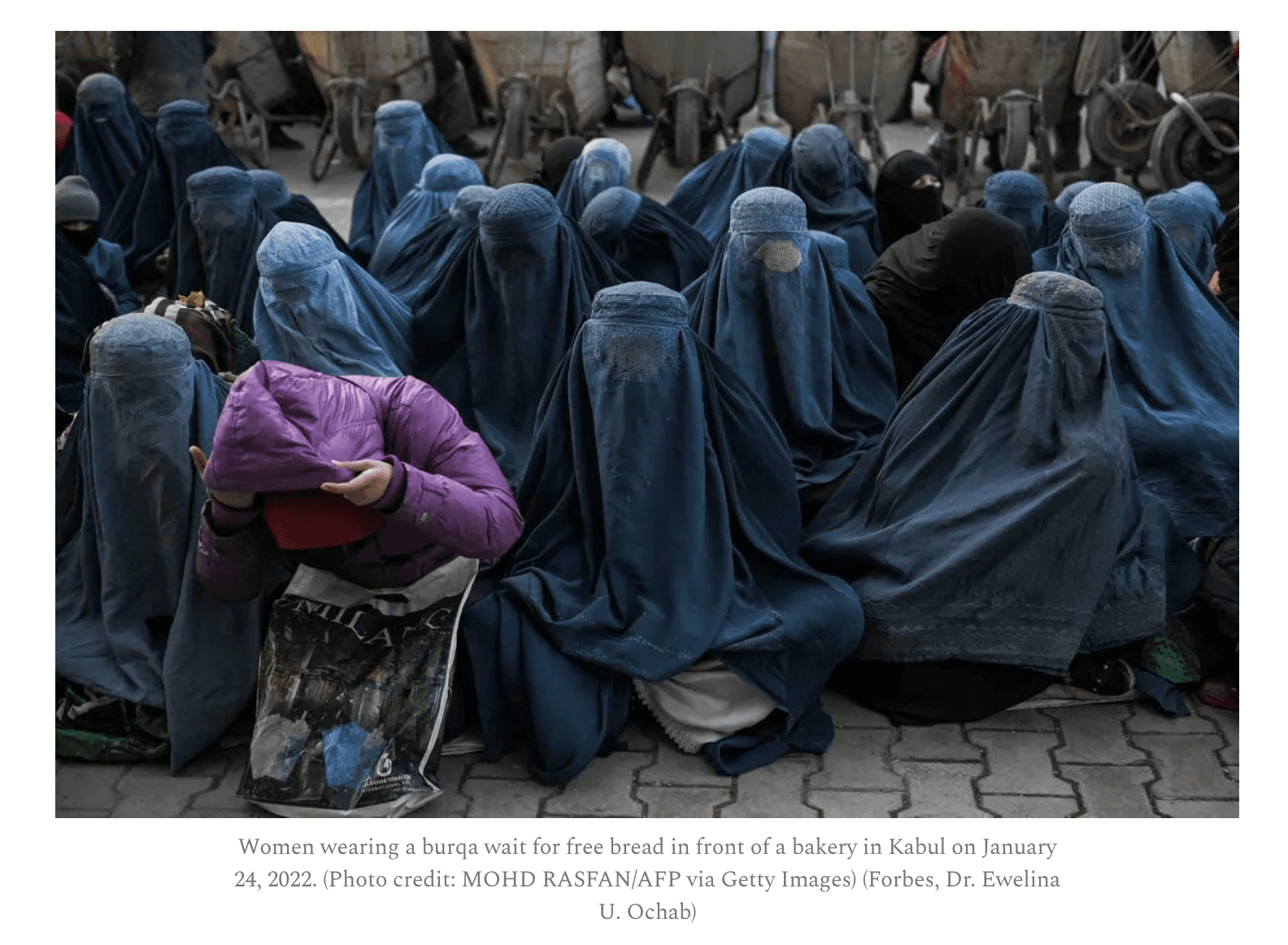
Every few weeks, another version of the same post appears on social media. On one side is a woman traveling with friends, dancing at a festival, or enjoying a day at the beach. On the other is an Afghan woman dressed in a blue burqa, her face completely concealed. The caption usually reads: “Me vs. Afghan women.” The intention is rarely malicious, and often sympathetic. Most of these posts encourage women to appreciate freedoms that others have been denied. Yet they also reveal something deeply unsettling about how social media has taught us to understand both freedom and feminism.
Somewhere between raising awareness and creating viral content, oppression has become aesthetic. Women’s freedom becomes measured by how visible they are, or by how much of themselves they are allowed to show, rather than by their autonomy, agency, and ability to shape their own lives. At the same time, the blue burqa has become one of the most recognizable visual symbols of female oppression. Repeated across news headlines, documentaries, and social media posts, it often obscures the very people it is meant to represent. Instead of seeing Afghan women as individuals with names, ambitions, professions, and voices, we are encouraged to see a collective image of suffering. Their identities become flattened into a single visual symbol, stripped of the history, politics, and humanity that define their lives.
The reality facing women in Afghanistan is not simply that they cannot dress as they please. Since the Taliban returned to power in 2021, Afghan women and girls have experienced one of the most comprehensive rollbacks of women’s rights in the modern world. Today, Afghanistan is the only country in the world where girls are prohibited from attending secondary school and university. More than 2.2 million girls have been denied access to education beyond the primary level, while women have been systematically excluded from many professions, public spaces, and decision-making roles. They face severe restrictions on their freedom of movement, are increasingly prevented from participating in public life, and continue to be silenced through policies designed to erase their presence from society. They have not simply lost the freedom to choose what they wear; they have lost the freedom to choose who they become. To reduce that reality to a comparison between a burqa and a bikini fundamentally misunderstands what freedom means. Freedom is not simply about clothing. It is education, work, political participation, economic independence, safety, and the ability to determine one’s own future.
This misunderstanding reflects a broader shift in how social media encourages us to consume injustice. Platforms built around short videos and images reward content that is immediate and emotionally digestible. Complex political crises are flattened into symbols that can be understood in seconds. A blue burqa instantly communicates oppression, while a beach holiday communicates liberation. Yet symbols are incapable of carrying history. Afghanistan did not become what it is today because women wear burqas, nor did Afghan women wake up one morning and suddenly lose their rights. Their lives have been shaped by more than four decades of war, foreign intervention, proxy conflicts, and political instability. The Soviet invasion in 1979 transformed Afghanistan into one of the Cold War’s most contested battlegrounds. Foreign powers armed competing factions in pursuit of geopolitical interests, civil war devastated the country, the Taliban first emerged in the 1990s, and after two decades of U.S.-led occupation, the withdrawal of international forces in 2021 paved the way for the Taliban’s return. None of this excuses the Taliban’s policies; rather, it reminds us that the oppression of Afghan women cannot be separated from histories of imperialism, military intervention, and the unequal power structures that have long defined international politics. To discuss Afghanistan without discussing these histories is to remove the very context that explains how millions of women arrived at this point.
It is here that post-colonial thinking becomes essential. Post-colonialism asks us to question why the Global South is so often represented through images of suffering while the political and historical forces that produced those conditions remain invisible. It challenges the tendency to portray countries such as Afghanistan as inherently oppressive or culturally backward without acknowledging how foreign intervention, imperial ambitions, and decades of geopolitical competition have shaped their realities. When history disappears, oppression appears natural rather than political. Afghan women become symbols of victimhood instead of individuals living through the consequences of decisions made both within and beyond their borders.
The same pattern extends far beyond Afghanistan. Consider Pearls by Sade, a song that has become increasingly popular on TikTok and Instagram as the soundtrack to videos comparing women in Africa with women in Europe or North America. Many users pair its haunting melody with luxury holidays, shopping trips, or aesthetic montages alongside images of poverty, often with little awareness of the song’s origins. Yet Pearls is not simply a sad song about distant suffering. Inspired by famine in East Africa, it tells the story of a woman whose search for food becomes so desperate that grains of rice are imagined as pearls because they are so precious and so scarce. It is a song about hunger, dignity, and survival. But online, even this story becomes detached from its historical and political context. Once again, the focus shifts away from the woman at the centre of the story and towards the emotions of the viewer. Instead of asking why famine exists or how colonial legacies, unequal global economies, and conflict have contributed to such suffering, we consume another aesthetic reminder to be grateful for our own lives.
This is not an argument against appreciating one’s freedom or against using social media to raise awareness. In many ways, these comparisons have introduced millions of people to the reality that Afghan women are living through. But awareness should be the beginning of engagement, not its conclusion. What Afghan women face today is not merely a collection of isolated restrictions but what an increasing number of governments, legal experts, and human rights advocates have described as gender apartheid: a system of institutionalized discrimination that seeks to exclude women and girls from nearly every sphere of public life. When we reduce this reality to a photograph of a burqa beside a bikini, we risk obscuring the deliberate political system that lies behind it.
Afghan women have been denied not only their education, their work, and their public presence, but increasingly their ability to speak for themselves. As journalists are silenced, activists imprisoned or forced into exile, and women removed from public life, the responsibility to keep their stories visible cannot rest on them alone. The international community must move beyond symbolic solidarity and confront the structures that sustain this systematic discrimination. Rather than merely reminding ourselves how fortunate we are, we should use the platforms and freedoms available to us to amplify Afghan women’s voices, demand accountability, and insist that the world does not normalize their exclusion. If freedom is truly universal, then our responsibility is not simply to admire our own, but to ensure that those who have been denied theirs are neither forgotten nor left to fight alone.
Works Cited:
“Afghanistan: Four Years on, 2.2 Million Girls Still Banned from School.” Unesco.Org, UNESCO, 14 Aug. 2025, https://www.unesco.org/en/articles/afghanistan-four-years-22-million-girls-still-banned-school. Accessed 08 July 2026.
Ochab, Dr Ewelina U. “Gender Apartheid Against Women And Girls In Afghanistan.” Forbes, 11 Mar. 2023, https://www.forbes.com/sites/ewelinaochab/2023/03/11/gender-apartheid-against-women-and-girls-in-afghanistan. Accessed 10 July 2026.